You are ready for more, and your search has to stay private.
You may have outgrown your role, or you may simply want to be ready in case things change. Either way, how you prepare matters. In close professional circles across Qatar, the UAE, Saudi Arabia, Bahrain, Oman and Kuwait, a visible search can cost you before the new role arrives.
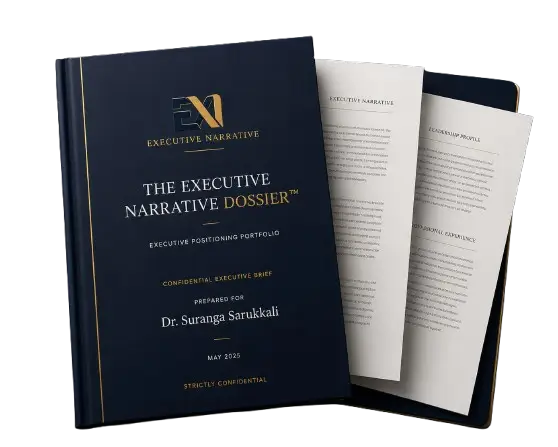
executive and professional profiles developed for leaders across the GCC.
C-Suite to Directoryears positioning senior professionals in the GCC market.
since 2020industries served, from energy and finance to aviation and healthcare.
across the GCCSenior people often search while still employed.
You have outgrown the role.
The work no longer stretches you, the next level is already taken, or the pay no longer matches what you deliver. Over time, staying put becomes the riskier choice.
You want to be ready, just in case.
A restructure, new leadership or a slower year in your sector can change things quickly. People who prepared early get to move on their own terms.
You move from a position of strength.
Employers and search consultants tend to see a candidate who is still in role as lower risk. You also negotiate better when you do not need the job.
The signals that tell your employer you are looking.
Rewriting your whole LinkedIn profile in one evening. Switching on the public “Open to Work” frame. A sudden wave of new connections with recruiters. A CV sent through a recruitment agency your company also uses. Professional networks in the GCC are close, and word travels quickly.
None of these are needed. You can prepare fully, and reach the right people, without any of them.
Prepare in stages, not all at once.
Fix the CV first, privately.
Your CV lives on your own computer, so get it right before anything public changes. Keep sensitive figures at a level you are allowed to share; here is how to show confidential achievements on a CV.
Update LinkedIn gradually.
Before you edit, turn off the setting that shares profile updates with your network. Then improve your headline and summary over a few weeks, so the changes look like normal upkeep. If you want recruiters to know you are open, use the option that shows this to recruiters only.
Talk to search consultants directly.
A short, private conversation with the consultants who cover your sector reaches roles that are never advertised, and leaves no public trace. Read how executive search firms find senior candidates.
Where you work changes the details.
The approach is the same in every GCC country. The details are not: notice periods, non-compete clauses, residence rules and local hiring priorities differ between Qatar, the UAE, Saudi Arabia, Bahrain, Oman and Kuwait. Read your contract, and check the rules that apply to you with the official authorities in your country before you resign.
Our GCC markets guide explains how senior hiring differs in each country. And when an offer arrives, expect your employer to try to keep you; here is how to think about a counteroffer.
Talk it through, or start on your own.
Common questions
Will my employer find out if I update my LinkedIn profile?
Not if you turn off the setting that shares profile updates with your network before you edit, and spread the changes over a few weeks. Avoid the public Open to Work frame and use the recruiters-only option instead.
Is it better to look for a new job while I am still employed?
Usually, yes. You can choose the right role instead of accepting the first offer, and employers tend to see a candidate who is still in role as lower risk.
Do you work with professionals outside Qatar?
Yes. We work with senior professionals in Qatar, the UAE, Saudi Arabia, Bahrain, Oman and Kuwait, and every call is held online.